
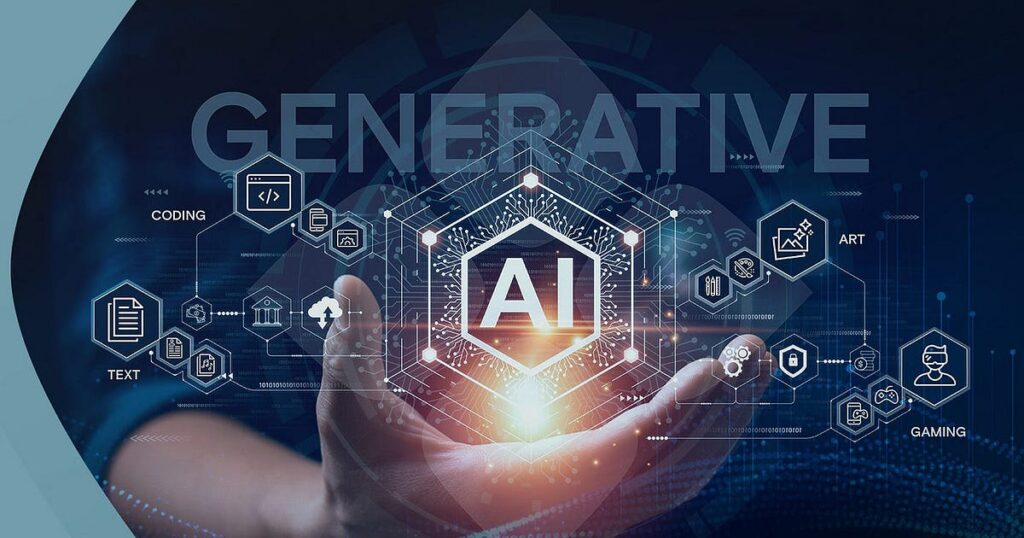
Generative AI has moved far beyond a buzzword to become a fundamental force of change within the tech industry. By 2026, its integration is no longer a futuristic concept but a present-day reality, fundamentally altering how companies innovate, develop products, and engage with their customers. This technology, capable of creating novel content from text to code to complex imagery, is not just an incremental improvement; it’s a paradigm shift redefining the boundaries of what’s possible.
This evolution is driven by increasingly sophisticated AI models that can understand context, nuance, and complex instructions. The impact is felt across every corner of the technology landscape, automating workflows, accelerating development cycles, and creating entirely new avenues for growth. We’ll explore how generative AI is reshaping key sectors, the opportunities it unlocks, and the critical challenges that come with this powerful transformation.
Accelerating Innovation in Software Development
One of the most profound impacts of generative AI is within software development itself. Developers now have powerful AI-powered assistants that streamline the entire coding process. These tools go beyond simple code completion; they can generate entire functions, write unit tests, debug complex problems, and even translate code from one programming language to another.
For example, AI assistants are helping teams build and deploy applications faster than ever. A developer can describe a desired feature in plain English, and the AI can generate the corresponding code framework. This frees up engineers to focus on higher-level system architecture and creative problem-solving rather than getting bogged down in repetitive coding tasks. This co-creation model is leading to significant boosts in productivity, reducing development costs and shortening time-to-market for new software products.
Revolutionizing Customer Service and Experience
The era of clunky, keyword-based chatbots is quickly fading. In 2026, generative AI is powering highly intelligent virtual agents that can handle complex customer inquiries with remarkable accuracy and empathy. These AI-driven systems can access and synthesize information from vast knowledge bases to provide personalized, context-aware support in real-time.
Imagine a customer troubleshooting a technical issue. Instead of navigating a frustrating phone tree, they can have a natural conversation with an AI agent that understands their problem, guides them through tailored solutions, and can even escalate the issue to a human agent with a complete summary of the interaction. This not only improves customer satisfaction but also allows human support staff to concentrate on the most challenging and sensitive cases, adding more value to the organization.
Unlocking New Frontiers in Creative Industries
Generative AI is also making significant waves in the creative sectors. From graphic design to music composition, AI tools are becoming indispensable partners for artists and creators. These tools can generate stunning visuals from simple text prompts, create unique soundtracks for videos, and even help write scripts or marketing copy.
This technology isn’t replacing human creativity; it’s augmenting it. A graphic designer can use an AI image generator to quickly prototype dozens of concepts for a marketing campaign, allowing them to refine the best ideas into a polished final product. Similarly, a video editor can use AI to generate custom background music that perfectly matches the tone and pacing of their content. This collaboration between human ingenuity and AI efficiency is unlocking unprecedented levels of creative output.
Navigating the Challenges and Ethical Considerations
The rapid adoption of generative AI is not without its challenges. As these models become more powerful, questions around data privacy, algorithmic bias, and intellectual property have become more urgent. Ensuring that AI-generated content is accurate and free from harmful biases is a critical responsibility for tech companies. There is an ongoing debate about the ownership of AI-created works and how to protect original creators whose styles might be mimicked by these models.
Furthermore, the potential for misinformation created with generative AI remains a significant concern. The tech industry is actively developing watermarking techniques and other methods to distinguish between human-made and AI-generated content to build trust and ensure responsible use.
The Future Outlook: A Collaborative Horizon
Looking ahead, the role of generative AI in the tech industry will continue to expand. We are moving toward a future where AI is seamlessly integrated into nearly every digital tool and workflow. The focus is shifting from standalone AI applications to deeply embedded AI capabilities that enhance existing platforms and create smarter, more intuitive user experiences.
The tech industry of 2026 is one defined by human-AI collaboration. Generative AI is amplifying human potential, automating the mundane, and paving the way for innovations we are only just beginning to imagine. For businesses, embracing this technology is no longer an option but a necessity for staying competitive and relevant in a rapidly evolving digital world. The journey is just beginning, and the companies that successfully navigate its complexities will lead the next wave of technological advancement.