
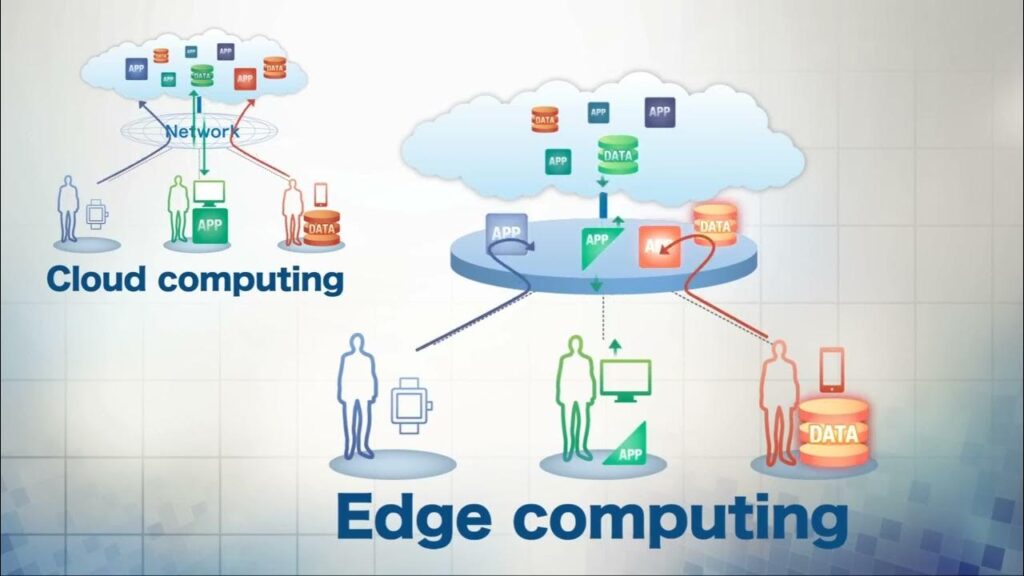
Data is the engine of modern business, but where you process that data can make all the difference. For years, cloud computing has been the go-to solution, offering massive storage and processing power from centralized servers. Now, a different approach is gaining ground: edge computing, which brings computation closer to where data is created. Understanding the distinction between these two powerful technologies is key to building an efficient, responsive, and cost-effective digital infrastructure.
This post will break down the core differences between edge and cloud computing. We’ll explore their unique advantages, examine real-world use cases, and provide clear guidance to help you decide which model best fits your operational needs.
What is Cloud Computing?
Cloud computing is the delivery of on-demand computing services—including servers, storage, databases, networking, software, and analytics—over the internet. Instead of owning and maintaining your own computing infrastructure, you can access these services from a cloud provider like Amazon Web Services (AWS), Microsoft Azure, or Google Cloud.
Think of it as a centralized data powerhouse. Your data is sent from devices like smartphones, laptops, and sensors to a massive, remote data center for processing. Once the analysis is complete, the results are sent back to your device. This model is incredibly effective for handling large-scale data processing, long-term storage, and running complex applications that are not time-sensitive.
Key Advantages of Cloud Computing
- Massive Scalability: Cloud platforms offer virtually limitless resources. You can scale your storage and computing power up or down on demand, paying only for what you use. This flexibility is perfect for businesses with fluctuating workloads.
- Centralized Management: With all your data and applications in one place, management and security are streamlined. Updates, patches, and security protocols can be applied uniformly across the entire system.
- Cost-Effectiveness for Big Data: For applications that need to analyze enormous datasets, the cloud provides the raw horsepower without the need for a huge upfront investment in physical hardware.
- Accessibility: As long as you have an internet connection, you can access your data and applications from anywhere in the world, fostering collaboration and remote work.
What is Edge Computing?
Edge computing is a decentralized computing model that brings data processing and storage closer to the source of data generation. Instead of sending data to a distant cloud, computation happens locally, on or near the device where the data is created. This could be a smart sensor on a factory floor, a connected vehicle, or even your smartphone.
The “edge” of the network is where the physical world meets the digital one. By processing data at this edge, organizations can reduce latency and save bandwidth. Only the most important data or summarized results are then sent to the cloud for longer-term storage or further analysis.
Key Advantages of Edge Computing
- Ultra-Low Latency: Since data doesn’t have to travel to a centralized cloud and back, response times are almost instantaneous. This is critical for applications where milliseconds matter, like autonomous vehicles or real-time industrial robotics.
- Improved Reliability: Edge devices can continue to operate and process data even if their connection to the central cloud is disrupted. This resilience is vital for mission-critical operations in locations with spotty internet.
- Enhanced Security and Privacy: Sensitive data can be processed and stored locally, reducing the risk of interception during transit. By minimizing the amount of raw data sent to the cloud, edge computing helps organizations comply with strict data privacy regulations.
- Reduced Bandwidth Costs: Processing data locally significantly cuts down on the amount of information that needs to be transmitted over the network, leading to substantial savings on bandwidth costs, especially for operations generating terabytes of data daily.
Head-to-Head Comparison: Edge vs. Cloud
| Feature | Cloud Computing | Edge Computing |
|---|---|---|
| Data Processing | Centralized, in remote data centers | Decentralized, near the data source |
| Latency | Higher (dependent on network) | Very low (near-instantaneous) |
| Scalability | Virtually unlimited centralized resources | Scalable through adding more edge devices |
| Bandwidth Usage | High (all data is transferred) | Low (only essential data is sent) |
| Connectivity | Requires a constant, stable internet link | Can operate offline or with intermittent connectivity |
| Best For | Big data analytics, web hosting, SaaS | Real-time applications, IoT, remote operations |
How to Choose the Right Approach for Your Needs
The choice between edge and cloud computing isn’t about which one is universally better; it’s about which one is better for a specific task. In fact, many modern systems use a hybrid approach, combining the strengths of both.
Here are some key factors to consider:
1. Latency Requirements
How quickly do you need a response? For applications like streaming video or running a company-wide CRM, the slight delay of the cloud is perfectly acceptable. But for a self-driving car that needs to react instantly to an obstacle, the ultra-low latency of edge computing is non-negotiable.
2. Scalability and Processing Power
Do you need to process massive historical datasets or run complex machine learning models? The cloud’s immense and scalable processing power is unmatched for these tasks. Edge devices have limited computational resources and are better suited for quick, localized data filtering and analysis.
3. Connectivity and Environment
Will your application be used in a remote location with unreliable internet? An oil rig, a remote farm, or a mine are perfect examples where edge computing shines. It ensures continuous operation without depending on a stable link to the cloud. In contrast, office-based applications with reliable connectivity are well-suited for the cloud.
4. Cost Considerations
Consider both infrastructure and operational costs. The cloud’s pay-as-you-go model can be very cost-effective, but transmitting huge volumes of data can lead to high bandwidth bills. Edge computing requires an initial investment in hardware but can dramatically reduce data transmission costs over time.
A Hybrid Future: The Best of Both Worlds
For many organizations, the optimal solution is not an “either/or” choice but a hybrid model. In this setup, edge devices handle immediate, time-sensitive processing locally. They then send curated insights, summaries, or anomalous data to the cloud for long-term storage, trend analysis, and business intelligence.
This hybrid approach allows you to benefit from the speed and reliability of the edge while leveraging the massive power and scalability of the cloud. It’s a powerful combination that provides a comprehensive, efficient, and intelligent infrastructure for the future.